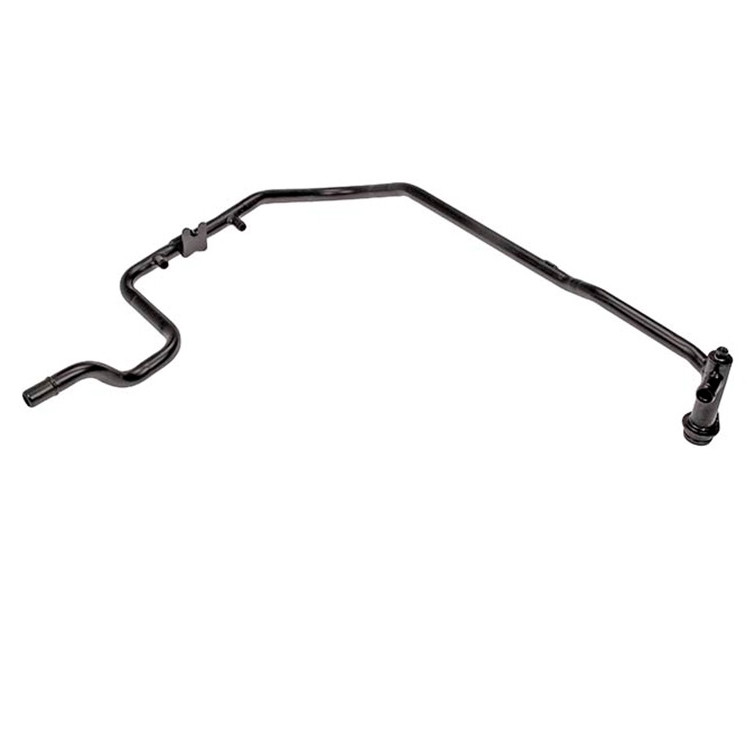
Genuine Hyundai/Kia 28240-2G401 Brake Vacuum Tube


Product Description
The Genuine Hyundai/Kia 28240-2G401 is an OEM Brake Vacuum Tube, a critical component of your vehicle's brake assistance system. This vacuum tube connects the engine intake manifold to the brake booster, transmitting engine vacuum to create the necessary assistive power for braking. A secure and leak-free vacuum supply is essential for ensuring proper brake pedal feel, responsive braking, and overall driving safety. Cracks, leaks, or degradation in this tube can lead to a hard brake pedal, increased stopping distances, and compromised braking performance.
This genuine part is engineered to precise factory specifications, guaranteeing a perfect fit, reliable vacuum seal, and long-term durability to maintain your vehicle's braking system integrity.
Detailed Applications
| Year | Make | Model | Configuration | Positions | Application Notes |
| 2015 | Hyundai | Santa Fe Sport | Turbocharged; L4 122 2.0L (1998cc) | Inlet | |
| 2014 | Hyundai | Santa Fe Sport | Turbocharged; L4 122 2.0L (1998cc) | Inlet | |
| 2014 | Hyundai | Sonata | Turbocharged; L4 122 2.0L (1998cc) | Inlet | |
| 2013 | Hyundai | Santa Fe Sport | Turbocharged; L4 122 2.0L (1998cc) | Inlet | |
| 2013 | Hyundai | Sonata | Turbocharged; L4 122 2.0L (1998cc) | Inlet | |
| 2012 | Hyundai | Sonata | Turbocharged; L4 122 2.0L (1998cc) | Inlet | |
| 2011 | Hyundai | Sonata | Turbocharged; L4 122 2.0L (1998cc) | Inlet |
Key Features & Benefits
Genuine OEM Quality: This is an authentic original equipment part designed to meet strict manufacturer standards for fit, material compatibility, and performance.
Ensures Brake System Integrity: Maintains a perfect vacuum seal between the engine and brake booster, which is crucial for providing the power-assist that makes braking smooth and effortless.
Durable Construction: Made from high-quality rubber or elastomeric materials designed to withstand underhood temperatures, engine vibrations, and exposure to various elements without cracking or degrading.
Precise Direct Fit: Engineered as an exact replacement, ensuring hassle-free installation with correct routing and connections to restore factory braking performance.
Technical Specifications
| Specification Category | Details |
| Part Name | Brake Vacuum Tube / Hose |
| Manufacturer | Genuine OEM (Hyundai/Kia) |
| Part Number | 28240-2G401 |
| Condition | New |
| Item Weight | Approximately 0.17 kg |
| Country of Origin | China |
Vehicle Fitment & Compatibility
This brake vacuum tube is designed for specific Hyundai, Kia, and related platform vehicles. The part is commonly associated with the following applications (list may not be exhaustive):
Primary Compatible Vehicles Include:
| Make & Model | Model Years | Notes |
| Hyundai Santa Fe (CM) | 2007-2012 | Main application. |
| Kia Sorento (XM) | 2009-2014 | Shares platform with Hyundai Santa Fe CM. |
| Lexus ES | Information to be confirmed by VIN | Potential application on specific model years. |
Important Note: Vehicle fitment can be complex. The information above provides a common guideline. It is absolutely essential to verify fitment using your vehicle's VIN number before purchase to ensure compatibility with your exact make, model, year, and engine configuration.
Installation & Symptoms of Failure
Signs You Need to Replace the Brake Vacuum Tube:
Hard Brake Pedal: The brake pedal feels very stiff and requires significantly more foot pressure to slow down or stop the vehicle.
Increased Stopping Distance: The vehicle takes longer to stop than normal, even under moderate braking.
Hissing Sound from Engine Bay: An audible hissing or sucking noise near the engine, especially when the brake pedal is pressed, indicating a vacuum leak.
Check Engine Light (Possible): A large vacuum leak can upset the engine's air/fuel mixture, potentially triggering a check engine light with related codes.
Installation Note:
Replacing the brake vacuum tube is generally straightforward but involves accessing the connection points at the intake manifold and brake booster. For safety-critical systems like brakes, professional installation is recommended to ensure all connections are secure and the vacuum system is free of leaks.
Frequently Asked Questions
Q: What happens if I drive with a leaking brake vacuum tube?
A: Driving with a vacuum leak in the brake booster system is dangerous. It eliminates the power assistance, making the brakes much harder to apply, significantly increasing stopping distances, and raising the risk of an accident.
Q: Is this a critical safety part?
A: Yes. The brake vacuum tube is a direct and critical component of the power braking system. Its failure directly impacts braking performance and vehicle safety. Always use a high-quality, correct-fitment replacement.
Q: How can I be sure this part fits my specific car?
A: The only guaranteed method is to provide us with your vehicle's 17-character VIN number. Our team can use this to perform exact, factory-level parts matching.
Call to Actio
Restore your vehicle's essential braking safety and performance with a genuine OEM vacuum tube.
Contact us today for a competitive quote and to confirm exact fitment for your vehicle using your VIN. Ensure your braking system operates as designed with OE part 28240-2G401.
Frequently Asked Questions (FAQ)
Q1: Are you a factory or a trading company?
A: We are a manufacturing factory (NINGBO JIATIAN AUTOMOBILE PIPE CO., LTD.) with IATF 16949 certification. This means we produce the parts ourselves, ensuring quality control and competitive pricing.
Q2: Do you offer samples for quality verification?
A: Yes, we encourage potential partners to test our product quality. Samples are available for a modest cost. Contact us to arrange a sample order.
Q3: What is your Minimum Order Quantity (MOQ)?
A: We offer flexible MOQs to support new business. For this standard OE part, the MOQ can be as low as 50 pieces. Custom parts may have different requirements.
Q4: What is your typical lead time for production and shipment?
A: For this specific part, we can often ship sample or small orders within 7-10 days. For larger production runs, the standard lead time is 30-35 days after order confirmation and deposit receipt.